Relocation Depression



In this article
Relocation depression is a stress response that may happen as a result of relocating or moving from one location to another. Relocation depression brings sadness, irritability, and tiredness. Such a depression may happen as a result of moving away from familiar associations.
An individual may feel sad and overwhelmed as they adapt, especially if they do not have a support network or a predictable daily routine. Moving may worsen a person’s depression as stress associated with relocating may exacerbate this condition.
Due to the strong feelings that come with moving, it is essential to recognize the symptoms of this transition and find ways to deal with them. Online counseling, such as Calmerry, is an effective way for individuals to cope with this transition.
By engaging in therapy for depression, individuals will be able to interact with a professional as they seek advice that helps them deal with the challenges that come with moving, as well as cope with depression that may come as a result of the transition.
Symptoms of Relocation Depression
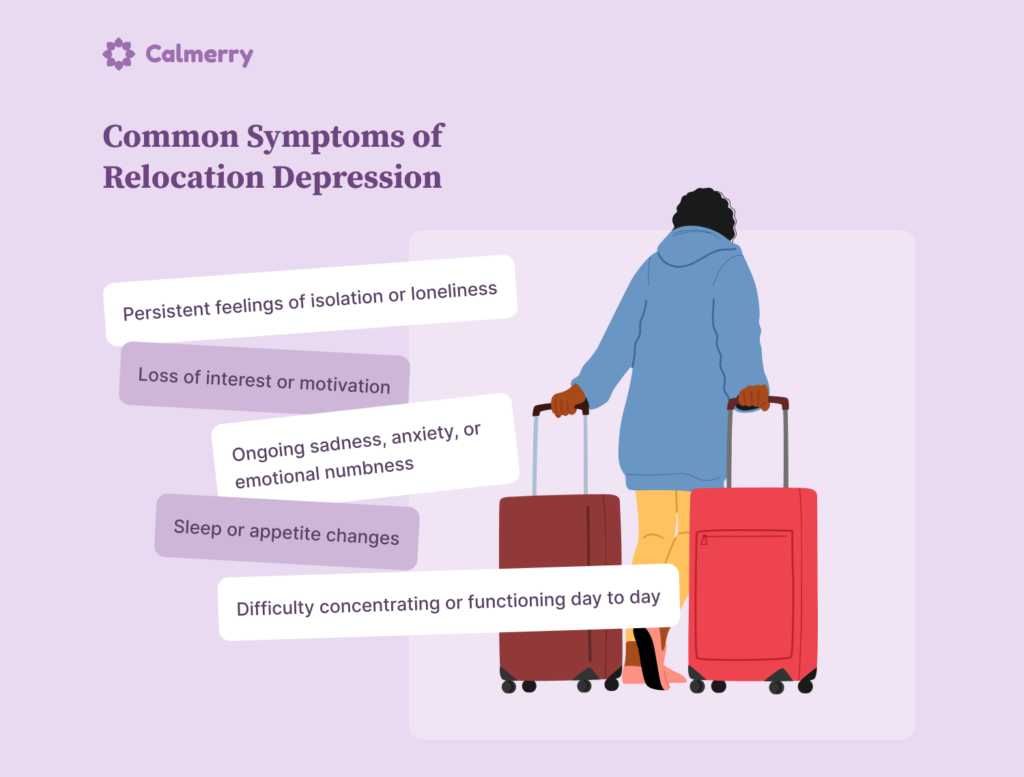
Relocation depression may appear with symptoms that relate to emotions, behaviors, or physical issues that happen after moving to a different location. These may include:
- A sense of being isolated or disconnected in a new space
- Loss of interest in previously enjoyed activities
- Increased anxiety associated with adapting to or navigating a new city
- Feelings of anger or irritability
- Changes in appetite (decreased appetite or stress-induced overeating)
- Weight changes associated with disrupted routines
- Sleep problems, such as insomnia or hypersomnolence
- Lack of motivation or inability to initiate tasks
- Difficulty concentrating
- Persistent feelings of depression or emotional numbness
- Physical symptoms such as headaches, fatigue, or muscle tension
- Excessive stress experienced in efforts to establish a new routine or to form new friendships
However, many people report a stage of confusion in terms of their emotional well-being once they relocate to a different environment. [1] Costlow, K., & Parmelee, P. A. (2019). The impact of relocation stress on cognitively impaired and cognitively unimpaired long-term care residents. Aging & Mental Health, 24(10), 1589–1595. https://doi.org/10.1080/13607863.2019.1660855 They may experience feelings of sadness, disconnection, or feel overwhelmed as they cope with their new environment. Such changes may compromise their emotional well-being, sense of predictability, and symptoms associated with depression.
Typically, real-life experiences may involve problems with establishing fresh social contacts, confusion regarding where one can seek assistance, as well as frustration with regard to the pace of adjustment within the new environment. Such tendencies indicate the importance of seeking professional help with regard to early detection of symptoms of relocation depression.
Causes of Relocation Depression
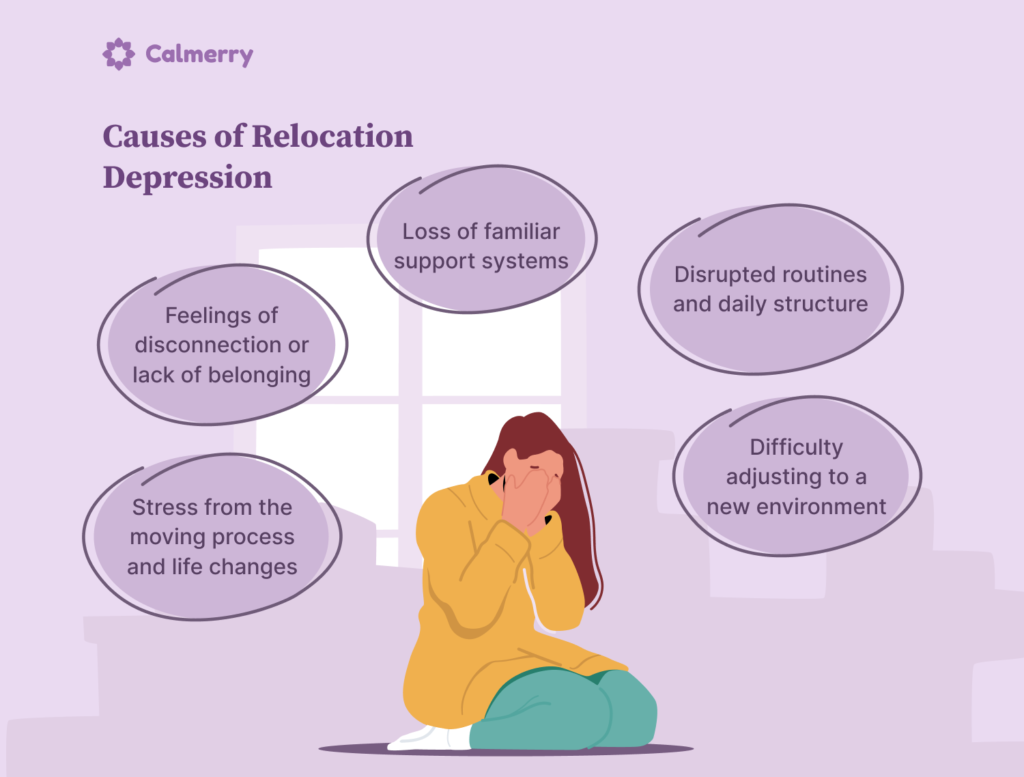
Relocation depression is caused by a combination of emotional, social, and environmental stressors that come with relocating. These stressors may interfere with day-to-day routines, thus increasing the chances of symptoms associated with depression. Mainly, this includes:
- Loss of a support network: Having to leave family and friends who provide the necessary regulation of emotional well-being is problematic.
- Having trouble adapting to a new environment: Moving to a new city, culture, or lifestyle may cause stress.
- Sense of being disconnected: Feeling as if one is not “at home” contributes greatly to feelings of depression.
- Stress associated with the moving process: Packing, financial considerations, changes in job, residential issues, etc., may all cumulatively cause stress.
- Social Isolation: When individuals lack opportunities to meet new people or make new friends, this can increase their feelings of loneliness.
- Disrupted daily routine: The loss of established habits may impact one’s motivation, concentration, or emotional well-being.
- Pressure for quick adaptation: The demand for rapid adaptability may generate inner turmoil and exacerbate symptoms of depression.
- Comparison between the old and new places: If the new environment fails to meet expectations, there may be disappointment and regret.
- Existing mental health conditions: People with issues such as anxiety disorders, major depressive disorders, or other mental health issues may be more susceptible to symptoms of relocation depression.
- Physical symptoms and fatigue: Other physical symptoms of moving house may further affect a person’s resilience. Stress, as well as change, occurs as a trigger within all of these issues. Where changes in routine happen, so do changes within established systems. This can be overwhelmingly difficult, as stress that occurs as a result of change can be difficult enough on its own.
How Long Does Relocation Depression Last

Relocation depression is not something that occurs on the same time schedule for everyone, but most people may exhibit symptoms for a few weeks through several months as they cope with their negative feelings associated with relocating. [2] Xi, J., Hwang, S., & Drentea, P. (2012). Experiencing a forced relocation at different life stages. Society and Mental Health, 3(1), 59–76. https://doi.org/10.1177/2156869312458291
The duration of the relocation process may depend largely on how long it takes a person to regain some semblance of normalcy as they relocate to a new location.
While some individuals may relocate with ease as soon as they develop a new routine, size up their new environment, or start new contacts, others may find that their symptoms associated with relocating to a new location may last.
Many variables come into play with regard to the duration that a person experiences this condition. People who move from one place to another may take much longer than others to cope with this condition. This is because their stress might come in the form of issues with accommodation, job insecurity, and separation from family.
People with existing mental health issues, such as depression, as well as anxiety disorders, may take much longer, as the stress associated with moving might worsen their symptoms.
Professionals note that the challenges of moving on from depression usually lessen as one regains structure and a sense of relatedness. Having a regular routine helps with mental well-being, but interacting with the new culture may also prevent feelings of loneliness.
An effort to meet new individuals, learn more about the new city, and familiarize oneself with the environment will greatly speed up the recovery.
Online Therapy for Moving Stress
Online therapy represents a working solution for people with problems associated with moving depression, as this is a particularly difficult time when a person may be lacking in terms of emotional well-being and may be facing many changes in their routine.
Due to the fact that moving will likely obstruct a person’s access to conventional treatments, online therapy represents a constant form of treatment for any form of depression. Among the most important advantages associated with this solution is that it is convenient, as treatments may be administered from any new environment.
Online therapy for depression is also beneficial in dealing with symptoms that may escalate as a person goes through a transformative stage. By engaging in talk therapy, solution-focused therapy, or other effective therapeutic practices, one can effectively cope with symptoms with the guidance of a mental healthcare professional, especially if they experience confusion, find it difficult to form new relationships, or cope with the new location.
During the process of selecting an online therapy service, there is a need to acknowledge some considerations. It is essential that individuals seek platforms that offer services from licensed therapists who can tackle depression as well as other mental issues that may emerge as a result of adjustments. It is important to consider platforms with flexible scheduling and effective technology, as Calmerry.
Finding Stability and Support After a Move
Relocation depression is a common emotional response to moving to a new place, often marked by feelings of sadness, isolation, anxiety, and difficulty adjusting to a new environment. Its symptoms can affect both mental health and daily functioning, especially when the loss of a support network, disrupted routines, or overwhelming stress contribute to the emotional impact of moving.
Understanding the causes, such as displacement, social isolation, and major life changes, helps individuals recognize what they are experiencing and why these feelings may arise.
Effective coping strategies, rebuilding structure, and staying connected to others can support emotional well-being during this transition. Online therapy is also a valuable treatment option, offering accessible and private professional help for managing symptoms, developing coping strategies, and preventing relocation depression from worsening.
If you are struggling with moving stress or finding it hard to adjust, it’s important to recognize the signs early and seek support. Reaching out to a mental health professional, whether locally or through online therapy, can make coping with relocation depression easier and help you feel more grounded in your new environment.
Costlow, K., & Parmelee, P. A. (2019). The impact of relocation stress on cognitively impaired and cognitively unimpaired long-term care residents. Aging & Mental Health, 24(10), 1589–1595. https://doi.org/10.1080/13607863.2019.1660855
Xi, J., Hwang, S., & Drentea, P. (2012). Experiencing a forced relocation at different life stages. Society and Mental Health, 3(1), 59–76. https://doi.org/10.1177/2156869312458291

online therapy
live video session