Exercise for Anxiety: A Powerful Tool for Relief and Management


In this article
Exercise for anxiety is an easy and proven method of maintaining good mental health. It is beneficial for someone dealing with persistent stress, fear, or other symptoms such as agitation and a racing heart. Despite being secondary in importance to professional treatment for anxiety, exercise has proved effective in managing symptoms of anxiety and overall well-being.
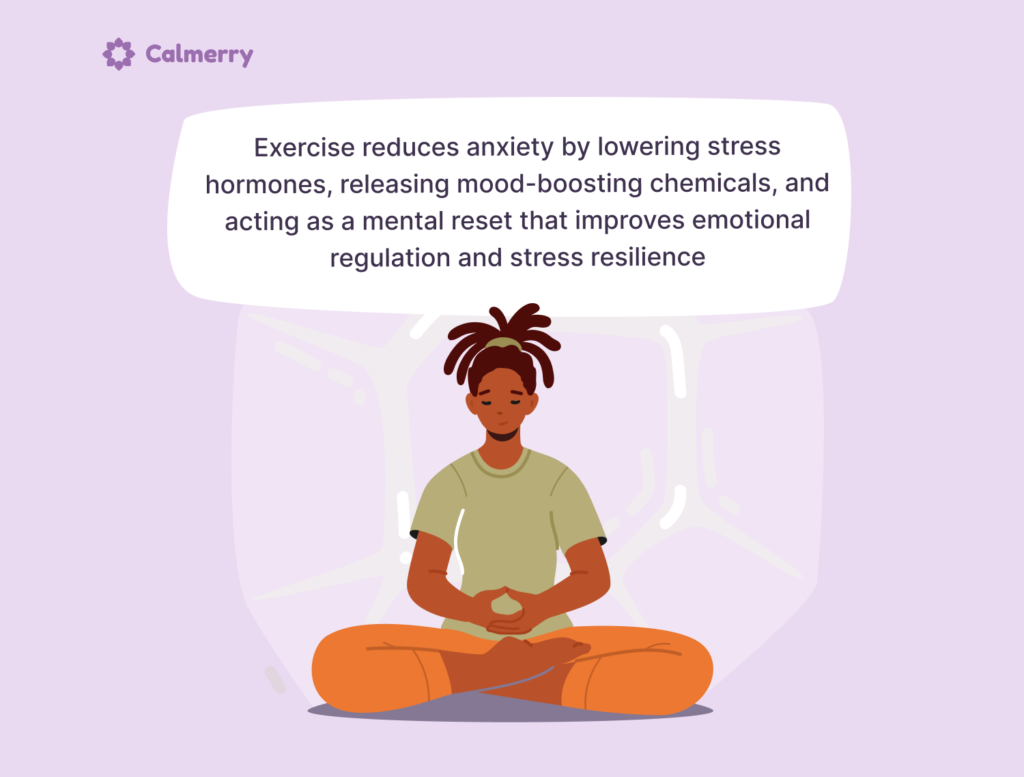
Physical exercise is also a great help in dealing with anxiety because it triggers the release of endorphins, as they are natural mood elevators. At the same time, it reduces cortisol production. This is why someone can feel immediately relieved of stress after a brief exercise session.
This article offers helpful, scientifically supported advice on the role of exercise as an anxiolytic or stress-management tool. Exercise can definitely be incorporated into one’s lifestyle. Even small, regular exercise can result in positive changes in mental health.
The Connection Between Exercise and Anxiety Relief
The link between exercise and enhanced mental well-being, and more specifically, anxiety reduction, is evident. When one exercises, one’s brain releases endorphins, a chemical that improves mood and alleviates discomfort. Exercise also reduces cortisol levels, a stress hormone, offering immediate reduction in anxiety and long-term stress reduction. One would say this is akin to “resetting” the brain. [1] Ratey, J. J., MD. (2019, October 24). Can exercise help treat anxiety? Harvard Health. https://www.health.harvard.edu/blog/can-exercise-help-treat-anxiety-2019102418096
These chemical changes help you manage your emotions. Exercise increases blood flow to the brain, raising oxygenation and promoting neuroplasticity, stimulating your brain to create new connections[highlight]. Over time, it helps to cope with stress, manage your emotions, and react calmly to stressful stimuli or when you have increased levels of anxiety. One session of exercise can already relieve symptoms of anxiety, particularly when you are under intense pressure.
At the same time, habitual physical activity is more effective for achieving these goals. Such results demonstrate long-term mental health benefits of exercise, including improved sleep quality, increased self-esteem, and reduced risk of developing anxiety disorders.
Why Exercise Works for Anxiety Management
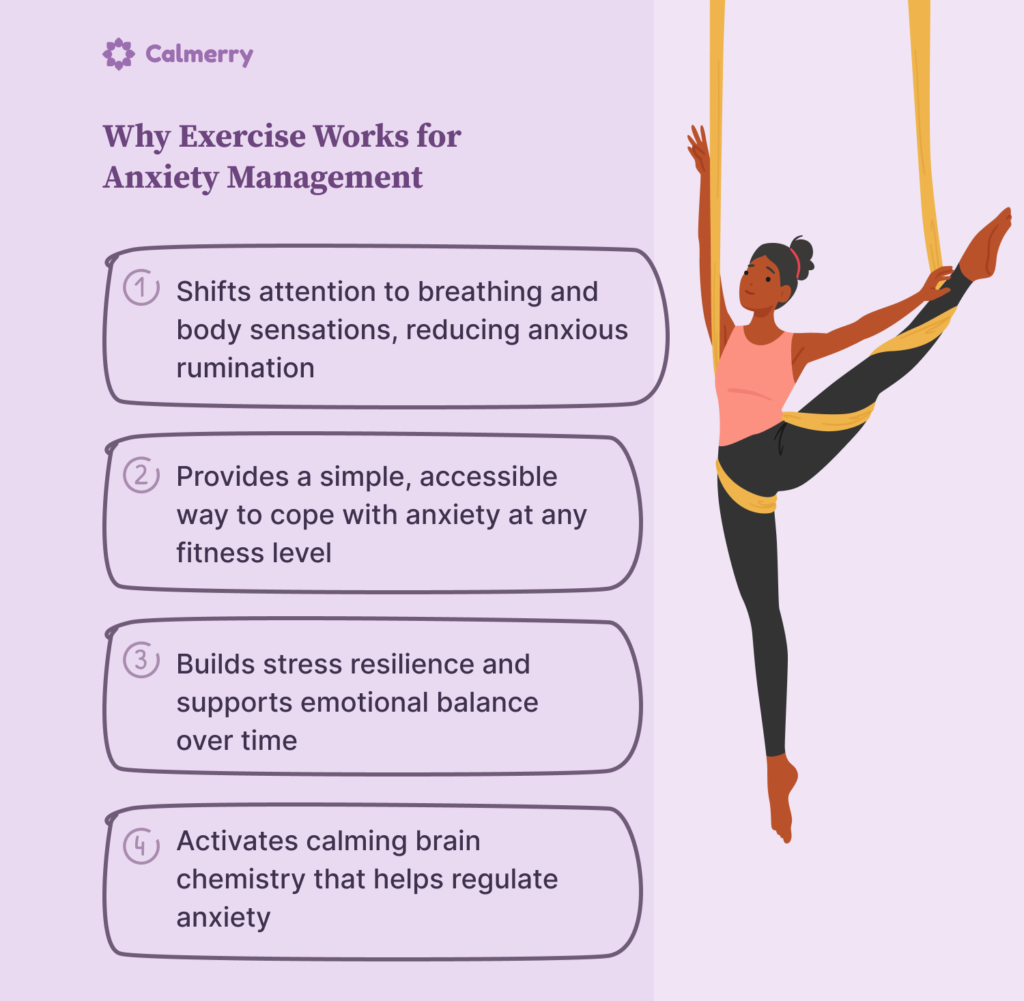
Physical activity and exercise help ease high anxiety because they tackle both the mental and physiological aspects associated with having an anxious state. When anxiety happens, the body enters a heightened alert state. This can worsen worry, tension, and stress. Physical activity interrupts this process, providing the nervous system with a healthier way to release excess energy.
The mental benefits of exercise include the motivation to remain grounded in the present. Breathing, movement, and physical sensations distract from rumination and anxiety.
What’s most beneficial about this technique for dealing with anxiety is that it can be done by everyone. [highlight]Exercise does not require any equipment and can be done by people of all fitness levels. Activities may range from walking to strength training. In fact, a 10-minute walk can be as effective as a 45-minute workout in relieving anxiety. Doing exercise regularly is a good way to deal with stress in life. [2] Exercise for stress and anxiety. (n.d.). https://adaa.org/living-with-anxiety/managing-anxiety/exercise-stress-and-anxiety
Types of Stress Relief Workouts for Anxiety
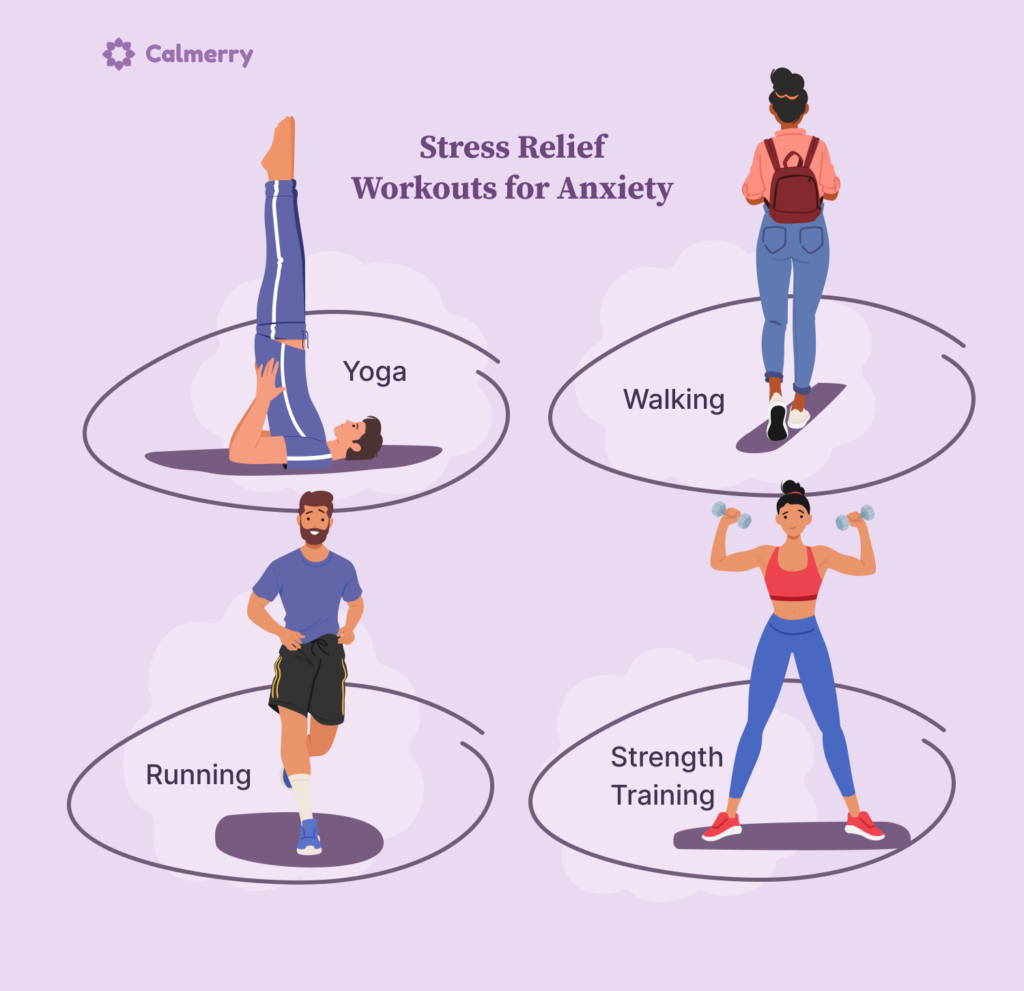
There are different exercise routines available to help reduce anxiety, and the best exercise is usually the one an individual can do. There is no single exercise routine suitable for all individuals, because different routines help alleviate stress in different ways.
As a form of exercise, yoga incorporates smooth movement and conscious breathing techniques to soothe the nervous system and relax the body. It is very effective for people dealing with a lot of stress and anxiety in their lives, as it helps them regulate their emotions and become more aware of their bodies.
One of the easiest ways to get exercise for anxiety is walking. This is a good option for those who are new to exercise or are feeling worn out. Taking a walk outside may enhance this experience.
Running or jogging is a type of aerobic exercise that helps improve mood by releasing endorphins. Aerobic exercises tend to reduce anxiety and mental tension.
High-intensity exercises are also important in dealing with anxiety since they build confidence and concentration. Weight training can help alleviate physical tension and emotional instability.
All these activities can be modified according to one’s fitness level, and even a short period of activity each week can make a significant difference in alleviating anxiety symptoms. [3] Depression and anxiety: Exercise eases symptoms. (n.d.). Mayo Clinic. https://www.mayoclinic.org/diseases-conditions/depression/in-depth/depression-and-exercise/art-20046495
A study in the Journal of Psychiatric Research found that a 12-week group exercise program can also be effective for reducing anxiety in primary care patients. [4] Henriksson, M., Wall, A., Nyberg, J., Adiels, M., Lundin, K., Bergh, Y., Eggertsen, R., Danielsson, L., Kuhn, H. G., Westerlund, M., Åberg, N. D., Waern, M., & Åberg, M. (2021). Effects of exercise on symptoms of anxiety in primary care patients: A randomized controlled trial. Journal of Affective Disorders, 297, 26–34. https://doi.org/10.1016/j.jad.2021.10.006
Creating an Exercise Routine for Anxiety Management
To develop a good exercise program for managing anxiety, it’s not necessary to have rigorous workouts or make any complicated plans. The most important thing is to make it a routine and select exercises you can easily handle. This will not only prevent you from becoming overwhelmed but also reduce the risk of giving up too soon. Simply exercising for 10-15 minutes can help you get relief from your anxiety symptoms and boost your ability to deal with stress.
An effective routine should be easy to incorporate into one’s daily routine. Realistic goals, such as exercising 3 to 4 times a week, can go a long way in managing anxiety and won’t be an added burden. Once you feel more confident about exercising, you can progress to longer durations and vigorous exercises.
Personalization is important. Some individuals may benefit from morning classes that help them begin the day with reduced stress. Others may benefit from evening exercise routines that help them relieve stress and promote better sleep. Engaging in activities you enjoy can increase self-efficacy and make it easier to maintain your exercise routine.
To maintain good health, it is recommended to do 150 minutes of mild aerobic exercise a week, which can be broken down into smaller sessions.
Mindfulness Through Exercise: Enhancing the Benefits
Being mindful helps us focus on the present moment. By integrating our bodily movement with our attention to breathing, muscular sensations, or rhythm, there is less space for anxiety to sneak in.
Even basic mindfulness practices can help. Slowing breathing patterns, for example, taking 4 counts to breathe in and 6 counts to breathe out, stimulates the parasympathetic response and reverses the fight-or-flight reaction. A body scan performed while moving and shifting focus from one muscle group to another also relaxes and reduces anxiety.
Activities such as tai chi, gentle stretches, or guided movement seamlessly combine exercise and mindfulness. Such activities promote calm, controlled movement. In fact, mindful exercise helps reduce stress and anxiety levels while promoting overall mental well-being. [5] DeBoer, L. B., Powers, M. B., Utschig, A. C., Otto, M. W., & Smits, J. A. (2012). Exploring exercise as an avenue for the treatment of anxiety disorders. Expert Review of Neurotherapeutics, 12(8), 1011–1022. https://doi.org/10.1586/ern.12.73
The addition of mindfulness to exercise makes it more than just physical movement, acting as a stress-reducing tool for managing anxiety.
Overcoming Barriers to Exercise for Anxiety Relief
Exercise may be intimidating when one has anxiety. Common obstacles to exercising while anxious include a lack of motivation, tiredness, fear of judgment, and a busy schedule. The first step towards conquering these obstacles is acknowledging them.
A common challenge is having little energy or being tired. When that happens, it is more beneficial to do low-intensity or rest-based exercise. A short walk, some stretching, or a simple home workout can still reduce anxiety. When pressed for time, it is helpful to break up exercise into smaller doses, such as 5 to 10 minutes throughout the day.
Social anxiety or gym-related awkwardness can also affect your regimen. Consider home exercise routines, walking outside, or guided exercise routines in mobile applications to work out in a more comfortable setting. Incorporating music or your favorite podcast can also help you overcome exercise-related anxieties.
Viewing exercise as a means of stress management, not as a performance achievement, is essential. Every time one exercises, their self-confidence is boosted as they feel more able to cope with anxiety.
Complementary Strategies for Anxiety Management
Although exercise is beneficial for easing anxiety and reducing stress, using it in combination with other effective techniques is a more effective means for improving mental health.
Besides exercise, the main way to treat anxiety is therapy. Cognitive behavioral therapy is beneficial in helping individuals identify and work through negative thinking patterns that contribute to anxiety. Together with exercise, it makes it complementary to anxiety therapy in managing depression and anxiety. Services like Calmerry can help you get through this tough period.
Keeping a journal is also an effective way to track individuals’ mood changes following exercise and patterns of reducing anxiety over time.
Exercises such as breathing techniques and meditation increase the psychological benefits of exercise several-fold. Together, help in dealing with emotions, stress management, and reducing symptoms of anxiety and depression. Adequate sleep, healthy eating, and a fixed daily routine also play an important role in maximizing the positive effect on anxiety.
Start Moving for Mental Wellness
One reason exercise is such an effective tool for improving mental wellness is that it is an excellent stress-reliever, reducing anxiety and boosting mood.
Exercise does not have to be harsh to be effective. For example, brief periods of steady activity, such as walking or aerobic exercise, as well as mindful movement, can improve coping skills, relieve anxiety, and promote wellness. Over time, the positive effect of exercise on anxiety is strengthened as it becomes a habit.
When it comes to managing anxiety disorders or posttraumatic stress disorder, it is always better to have exercise as a part of a well-rounded management plan. This may include mindfulness or professional assistance. Starting with one activity and being consistent is a great way to see real results.
For people in need of professional help, online counseling services such as Calmerry can be a great resource, offering a structured approach to lifestyle change.
Ratey, J. J., MD. (2019, October 24). Can exercise help treat anxiety? Harvard Health. https://www.health.harvard.edu/blog/can-exercise-help-treat-anxiety-2019102418096
Exercise for stress and anxiety. (n.d.). https://adaa.org/living-with-anxiety/managing-anxiety/exercise-stress-and-anxiety
Depression and anxiety: Exercise eases symptoms. (n.d.). Mayo Clinic. https://www.mayoclinic.org/diseases-conditions/depression/in-depth/depression-and-exercise/art-20046495
Henriksson, M., Wall, A., Nyberg, J., Adiels, M., Lundin, K., Bergh, Y., Eggertsen, R., Danielsson, L., Kuhn, H. G., Westerlund, M., Åberg, N. D., Waern, M., & Åberg, M. (2021). Effects of exercise on symptoms of anxiety in primary care patients: A randomized controlled trial. Journal of Affective Disorders, 297, 26–34. https://doi.org/10.1016/j.jad.2021.10.006
DeBoer, L. B., Powers, M. B., Utschig, A. C., Otto, M. W., & Smits, J. A. (2012). Exploring exercise as an avenue for the treatment of anxiety disorders. Expert Review of Neurotherapeutics, 12(8), 1011–1022. https://doi.org/10.1586/ern.12.73

online therapy
live video session