Can Hypothyroidism Cause Anxiety?


In this article
We are often told that anxiety is a message from our minds, a signal that we are overworking, overthinking, or carrying the weight of unresolved emotional trauma. When racing thoughts begin, and an inexplicable sense of dread sets in, our instinct is almost always to look inward. We analyze our relationships, scrutinize our work-life balance, or try to “mindfulness” our way back to calm.
But have you ever paused to consider that we might be looking at the map upside down?
What if the anxiety you are feeling isn’t a reaction to your life circumstances, but a physiological glitch in your hardware? It’s a comfortable assumption that our emotions are purely psychological, but the reality is often messier. For millions of people, especially women, the root of that constant, buzzing nervousness isn’t located in the head; it’s in the neck.
While the endocrine system doesn’t get nearly as much credit as the brain when we talk about mental health, it acts as the silent puppeteer behind the scenes. We typically associate an underactive thyroid with low energy, assuming that “slowing down” equals being calm or lethargic. But is it possible that a body running on empty doesn’t get calmer, but rather panics?
A growing body of evidence suggests the answer is yes. Hypothyroidism can cause significant mental distress, not because you are failing to cope, but because your biology is sending a distress signal. It invites us to rethink the standard approach: perhaps the solution isn’t always more talk therapy, but better hormonal balance.
What Is Hypothyroidism? (It’s Not Just About Metabolism)
When you hear the term “thyroid problem,” what is the first thing that comes to mind? For most of us, the association is almost exclusively physical: weight gain, hair loss, or the need for a midday nap. We tend to view the thyroid as the body’s thermostat for burning calories.
But that perspective, while common, misses the forest for the trees.
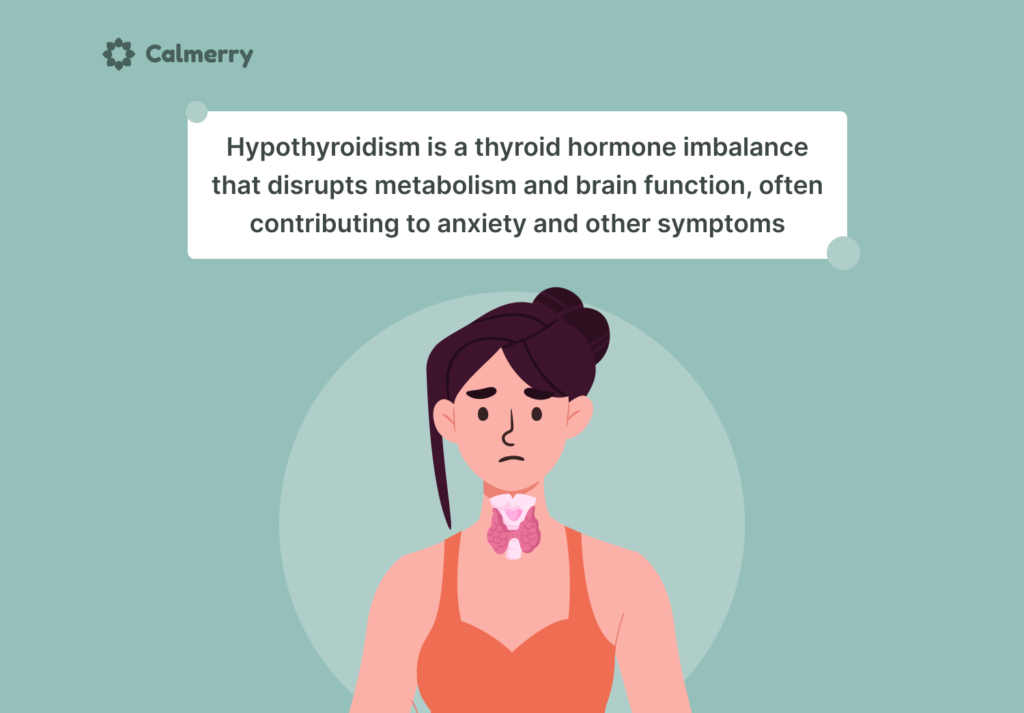
Hypothyroidism occurs when this butterfly-shaped gland at the base of your neck stops producing enough hormones (T3 and T4). But to say it just “regulates metabolism” is a massive oversimplification that does patients a disservice.
Let’s look at it differently: Your metabolism isn’t just about fitting into your jeans; it is the energy production system for every single cell in your body, including your brain cells. Hypothyroidism is a condition in which the thyroid gland does not produce enough thyroid hormones to meet the demands of the neural network.
In this light, the distinction between primary hypothyroidism (where the gland itself fails) and secondary causes becomes critical not just for your waistline, but for your peace of mind. When you do not produce enough thyroid hormones, your brain is essentially being asked to run a marathon while breathing through a straw. Is it any wonder that the result is a feeling of frantic, breathless anxiety?
The Thyroid-Brain Axis: Why “Slowing Down” Creates Anxiety
It makes sense that an overactive thyroid (hyperthyroidism) causes anxiety because the body is speeding up. But why does thyroid dysfunction that slows the body down result in panic and nervousness?
The answer lies in the effect thyroid hormones have on the brain. Research indicates that thyroid function is closely linked to the regulation of neurotransmitters such as serotonin and norepinephrine, which are chemical messengers that stabilize mood. [1] Bauer, M., Heinz, A., & Whybrow, P. C. (2002). Thyroid hormones, serotonin and mood: of synergy and significance in the adult brain. Molecular Psychiatry, 7(2), 140–156. https://doi.org/10.1038/sj.mp.4000963
Here is why people with hypothyroidism often feel anxious:
- Compensatory stress response: When your body lacks energy due to low thyroid hormone levels, the adrenal glands may pump out extra adrenaline and cortisol (stress hormones) to compensate and keep you functioning. This “fight or flight” chemical surge can feel exactly like a panic attack.
- Serotonin depletion: Thyroid hormones modulate the sensitivity of serotonin receptors. Low levels can mimic a serotonin deficiency, leading to irritability and rumination.
- Cognitive strain: The struggle to focus (brain fog) places the brain under immense psychological stress, creating a secondary form of performance anxiety.
Recognizing the Signs: Symptoms and Manifestations
One of the trickiest aspects of this condition is that hypothyroidism can develop slowly over time. The changes are often subtle at first. You might blame aging, stress, or a poor diet. However, as the deficiency deepens, the manifestations of hypothyroidism become more pronounced.
Hypothyroidism symptoms are not limited to the physical body; they are deeply psychological.
Physical and Mental Overlap
Symptoms may include a mix of the following:
- Fatigue mixed with restlessness: You feel “tired but wired.”
- Physical changes: Dry skin, hair loss, and unexplained weight gain.
- Temperature sensitivity: Feeling cold when others are comfortable.
- Menstrual irregularities: For women, changes in the cycle often accompany mood changes.
- Cognitive issues: Memory lapses and difficulty concentrating.
The Anxiety Component
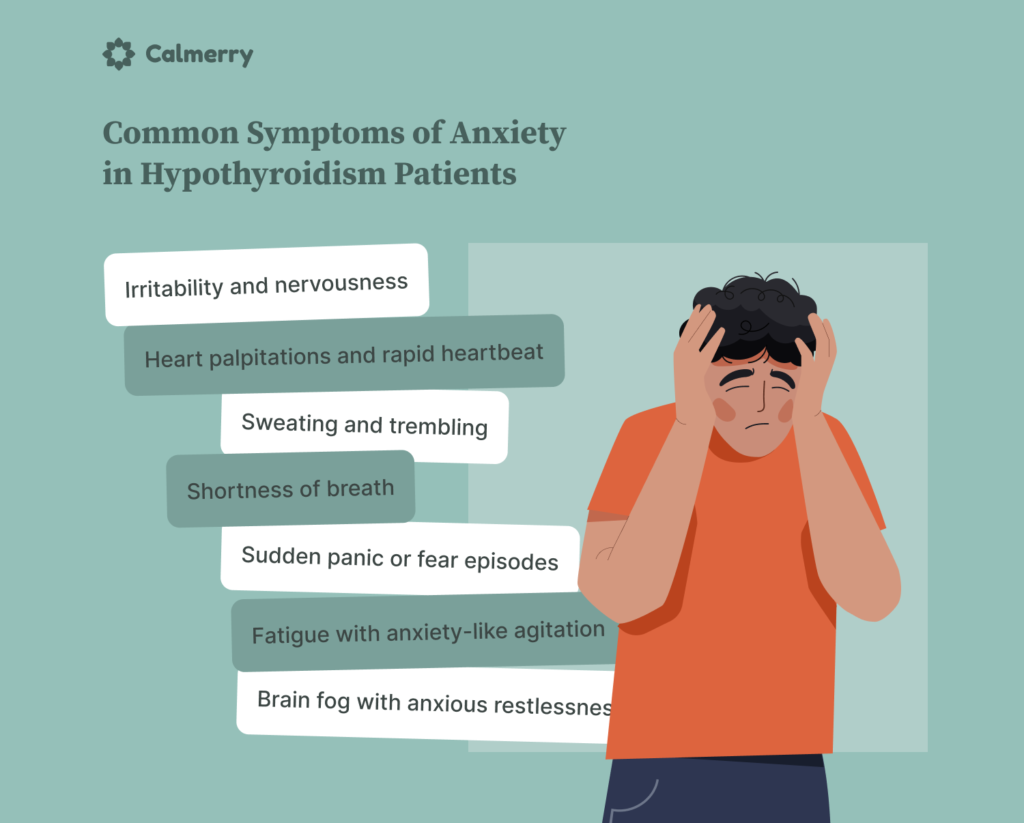
The degree of anxiety varies from person to person. For some, it is a low-level background worry. For others, it manifests as severe panic attacks. Symptoms can also include irritability, social withdrawal, and a feeling of impending doom.
Importantly, symptoms like palpitations or shortness of breath can occur even in hypothyroidism, confusing patients who think these are only signs of an overactive thyroid. [2] Bernardes, B. M., De Oliveira Borba, M. C., Moreira, S., Sartori, C. S., Da Silva Júnior, I. F., De Souza, M. T. L., Câmara, A. C. B., Bastos, W. L., Silveira, L. G., Rezende, J. M. E., Folgosi, F., Franzoni, I., Berquo, J. M., & Moreira, A. K. L. G. (2024). RELATIONSHIP BETWEEN MOOD DISORDERS AND THYROID CHANGES. Brazilian Journal of Implantology and Health Sciences, 6(2), 2241–2256. https://doi.org/10.36557/2674-8169.2024v6n2p2241-2256
The Diagnostic Challenge: Why You Might Be Missed
If you suspect your anxiety is thyroid-related, specific blood work is required. Thyroid function tests are the gold standard for diagnosis. However, many patients fall into a “diagnostic gap.”
Understanding TSH
The most common screening tool measures elevated TSH (Thyroid-Stimulating Hormone) levels. When your thyroid is low, your pituitary gland screams at it to work harder, raising your TSH.
- The trap: The range for “normal” TSH is wide. You might have symptoms and may feel terrible, but if your numbers are technically within the reference range, you might not be diagnosed with hypothyroidism immediately.
- The solution: Functional medicine guidelines and the American Thyroid Association suggest that looking at the full picture, including Free T3, Free T4, and Thyroid Antibodies, is crucial for a proper hypothyroidism diagnosis.
Hypothyroidism can affect anyone, but because symptoms come on gradually, many people spend years treating “just anxiety” before the underlying biological cause is found.
Note: Always consult a primary care physician or endocrinologist for medical testing. This information is for educational purposes.
Treatment and Management: A Two-Pronged Approach
The good news is that this condition is highly treatable. However, recovering from thyroid-induced anxiety requires a dual approach. You cannot “think” your way out of a hormone deficiency, but medication alone may not immediately undo the neural pathways of anxiety that have formed over time.
1. Medical Intervention: Restoring Balance
The treatment of hypothyroidism generally involves replacing the missing hormone.
- Medication: The most common treatment is synthetic levothyroxine (T4).
- How to take it: To ensure absorption, this medication must be taken in the morning on an empty stomach, at least 30 to 60 minutes before breakfast.
- Patience is key: It takes time to find the right dosage. As you receive treatment, your energy levels should stabilize, and the chemical driver of your anxiety should decrease.
Effective management of hypothyroidism requires regular monitoring. If you do not have enough thyroid hormone, anxiety persists. Conversely, if the dose is too high, it can cause hyper-symptoms.
2. Psychological Support: Retraining the Brain
Even after thyroid hormone levels stabilize, the habit of anxiety often remains. The brain learns patterns. If you have spent 2 years feeling anxious due to low thyroid, your amygdala (the fear center) is hypersensitized.
This is where online counseling becomes a critical part of the treatment plan. Therapy helps in several specific ways:
Cognitive Behavioral Therapy (CBT)
CBT is the gold standard for anxiety or depression. For thyroid patients, CBT helps distinguish between a physical symptom (e.g., “my heart is beating fast because of my condition”) and a catastrophic thought (e.g., “I am dying”). It teaches you to manage the reaction to the physical sensation.
Navigating Health Anxiety
Chronic illness often triggers health anxiety (hypochondria). The prevalence of anxiety in thyroid patients is often exacerbated by the fear of never getting better. A licensed therapist can help you navigate the trauma of diagnosis and the fear of chronic illness.
Stress Reduction
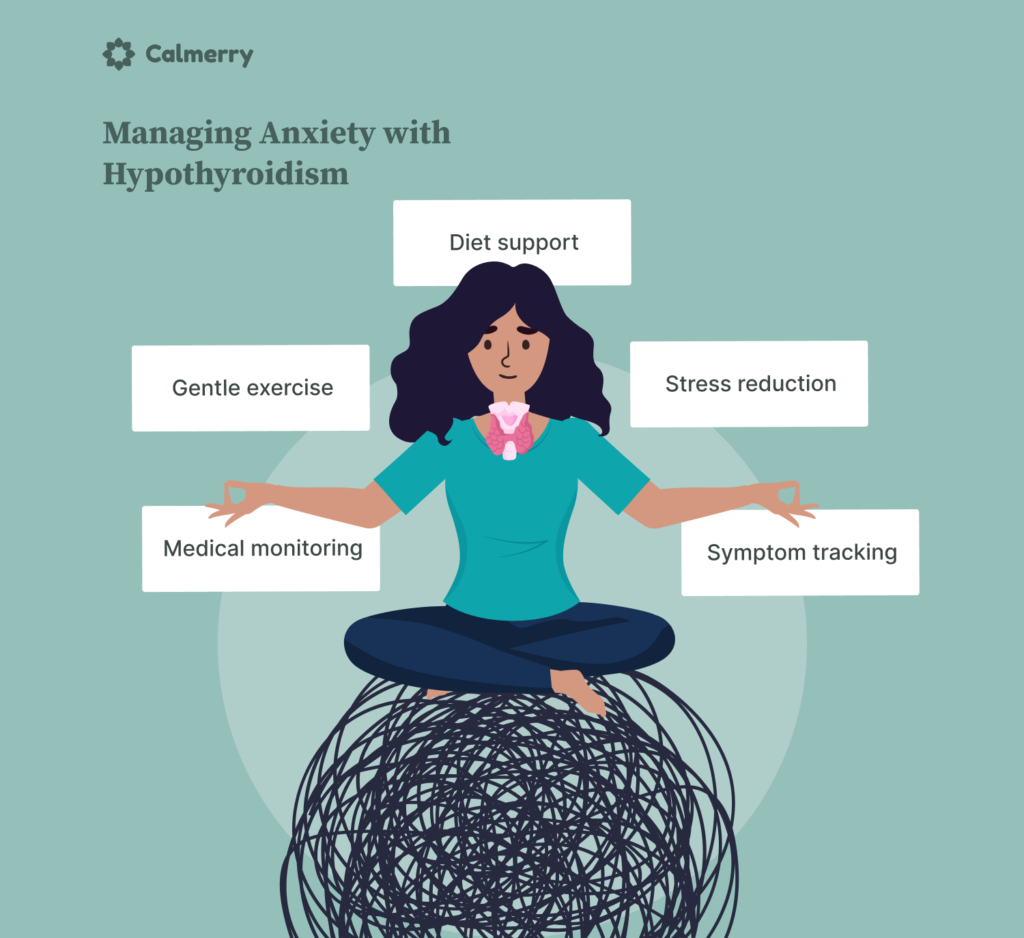
Stress inhibits thyroid function (lowering the conversion of T4 to active T3). Therefore, assessment and management of your stress levels are vital. Therapy provides a safe space to offload emotional burdens that may be physically suppressing your thyroid.
Lifestyle Strategies to Support Your Thyroid
While working with your doctor and therapist, certain lifestyle changes can help reduce hypothyroidism symptoms and lower anxiety levels. The American Thyroid Association and other bodies often recommend looking at holistic health factors alongside medication.
Diet and Gut Health
The association between thyroid function and gut health is profound.
- Nutrient density: Ensure you are getting enough Selenium, Zinc, and Iron, which are vital for thyroid conversion.
- Trigger foods: For some, gluten can trigger autoimmune thyroid flares. Listen to your body.
Rest and Movement
Hypothyroidism can develop slowly over time and cause a variety of metabolic issues, making high-intensity exercise difficult.
- Gentle movement: “Pushing through” fatigue spikes cortisol. Choose walking or yoga, which support the endocrine system without overexerting it.
- Sleep: Prioritize sleep to allow the brain to heal.
When to Seek Professional Help
If you are currently treating hypothyroidism but still feel anxious, or if you are treating anxiety but feel physically unwell, you need to advocate for a comprehensive review of your health.
You should reach out to a professional if:
- Your anxiety or depression interferes with daily life (work, sleep, relationships).
- You experience panic attacks despite being on thyroid medication.
- You feel “gaslighted” by the feeling that your physical symptoms are being dismissed as “just stress.”
Clients’ well-being is the ultimate goal of therapy. If you aren’t feeling better, something in the treatment plan needs adjustment.
At Calmerry, we recognize that mental health is rarely confined to the mind; it is a whole-body experience. Our licensed therapists are experienced in helping clients manage the psychological toll of chronic illness, health anxiety, and the emotional roller coaster of hormonal imbalances.
You don’t have to navigate this alone. While your endocrinologist balances your hormones, let us help you balance your mind.
Frequently Asked Questions (FAQ)
Can levothyroxine cause anxiety?
Yes, if the dosage is too high. Levothyroxine speeds up metabolism. If you take more than your body needs, it can induce symptoms of hyperthyroidism, including jitters, rapid heartbeat, and anxiety. Always report these symptoms to your doctor immediately.
Will my anxiety go away once my thyroid is treated?
For many, anxiety significantly decreases once T3 and T4 levels are optimized. However, if you have developed anxiety patterns or if life stressors contribute to the feeling, you may still need therapy to fully recover. The symptoms come from a biological root, but the behavioral patterns may persist.
Does Hashimoto’s disease cause panic attacks?
Yes. Hashimoto’s often involves swings between underactive and overactive thyroid function (called “Hashitoxicosis”) as thyroid cells are destroyed. These swings can release bursts of hormones into the bloodstream, triggering sudden panic attacks.
Is it true that symptoms can also include depression?
Absolutely. Depression is one of the most common symptoms of hypothyroidism because the brain’s energy production is slowed. It is very common for patients to experience both anxiety and depression simultaneously.
How long does it take to feel better?
Once you begin taking medication in the morning on an empty stomach consistently, it typically takes 4-6 weeks to notice a shift in energy and mood. Full stabilization can take several months.
Bauer, M., Heinz, A., & Whybrow, P. C. (2002). Thyroid hormones, serotonin and mood: of synergy and significance in the adult brain. Molecular Psychiatry, 7(2), 140–156. https://doi.org/10.1038/sj.mp.4000963
Bernardes, B. M., De Oliveira Borba, M. C., Moreira, S., Sartori, C. S., Da Silva Júnior, I. F., De Souza, M. T. L., Câmara, A. C. B., Bastos, W. L., Silveira, L. G., Rezende, J. M. E., Folgosi, F., Franzoni, I., Berquo, J. M., & Moreira, A. K. L. G. (2024). RELATIONSHIP BETWEEN MOOD DISORDERS AND THYROID CHANGES. Brazilian Journal of Implantology and Health Sciences, 6(2), 2241–2256. https://doi.org/10.36557/2674-8169.2024v6n2p2241-2256

online therapy
live video session