Gen Z’s Anxiety and Social Media Pressure


In this article
Gen Z anxiety and social media pressure are huge mental health concerns for young individuals. Today’s teens and young people are social media-generation individuals. It’s always present in their lives and influences how they communicate, who they are, and how connected they feel. The more they use it, the bigger the concerns about their mental health.
More than half of Gen Z users spend more than 4 hours per day online. [1] Howarth, J. (2025, July 31). 25+ New Generation Z Statistics (2025). Exploding Topics. https://explodingtopics.com/blog/gen-z-stats This is related to more issues regarding Gen Z mental health. Youth are stuck in a cycle of comparison, need for likes, and social pressure, with no time to pause. Everyone is more aware of what is happening to Gen Z because of digital platforms and of how it affects their emotions.
Such apps include Instagram, TikTok, and Snapchat. Social media impact on Gen increases feelings of comparison, fear of missing out, and the need to perform.
The State of Gen Z Mental Health in the Social Media Era
Gen Z mental health is the emotional experiences of people born between 1997 and 2012. They have grown up with smartphones and social networks, which impact on their mental health and lives in many ways. Social networks influence how people interact with others, who they are, and the emotions they experience. Mental health issues among Gen Z may be associated with their experiences in the digital world.
In fact, more than 80% of Gen Z use websites such as YouTube daily. Many Gen Z individuals spend considerable time on Instagram, TikTok, and other social media platforms. This means that Gen Z is always connected and exposed to constant feedback, trends, and comparisons that may increase their stress levels.
One study indicates that over 60% of Gen Z individuals experience high levels of stress and anxiety. [2] A-Cbt, J. S. P. (2024, August 19). SOCIAL ANXIETY IN GENERATION Z. National Social Anxiety Center. https://nationalsocialanxietycenter.com/2024/08/19/social-anxiety-in-generation-z/ This Gen Z social media anxiety is especially high in individuals who are heavy users of online platforms.
Social media impact on Gen Z also contributes to performance by growing visibility and the need for interaction. Over the years, this has proven to be harmful to mental well-being, increasing exhaustion and anxiety.
Causes of Social Media-Induced Anxiety in Gen Z
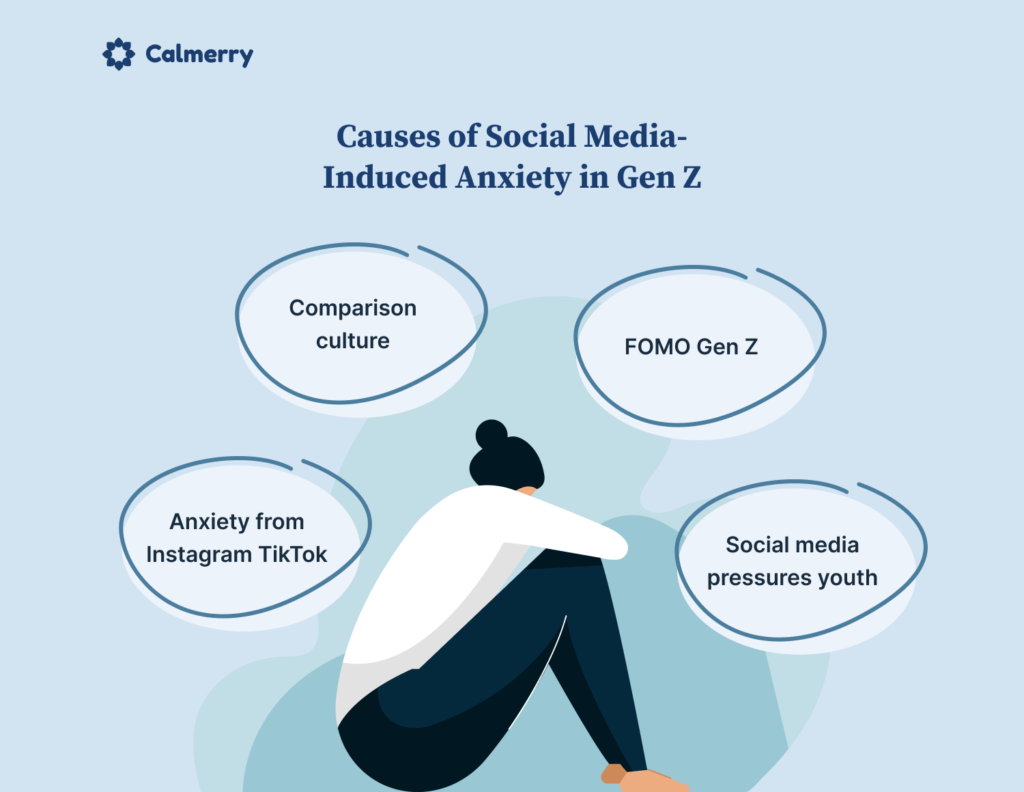
Gen Z social media anxiety exists due to the immense pressure, comparisons, and judgments on online platforms. Many young people experience anxiety due to the normalcy of online interactions for them. These are the factors that reveal the stress and anxiety generated by digital platforms for teens and young adults:
- Social Comparison Culture: The ideal life on a digital network presents a perfect picture of achievement and living. The Gen Z generation has a perfect representation of their peers on online platforms, making comparison impossible to avoid. 75% of Gen Z blame social media for negative mental health impacts like stress from comparisons.
- FOMO Gen Z (Fear of Missing Out): Social media updates about events and success stories can trigger fear of being left out. Gen Zers believe that to stay informed about the latest trends or social developments, they have to be online. In fact, 36% of Gen Z cite social media as the main reason for negative emotions. [3] Swns. (2024, August 16). Why 3 in 4 Gen Zers blame social media for their mental health decline. New York Post. https://nypost.com/2024/08/16/lifestyle/why-3-in-4-gen-z-blame-social-media-for-their-mental-health-decline/ Too much time spent on social sites generates this fear of being left out, leading to more anxiety.
- Social Media Pressure on Youth: Being online is often a performance. Young individuals feel pressure to post, comment, and react to content on online platforms in real time. Likes, views, and comments function as indicators of social worth, making social interactions a source of tension.
- Anxiety from Instagram and TikTok: Instagram’s visually oriented platform and filters promote the ideal body shape and create body-image-related anxiety. TikTok’s algorithm-driven content encourages users to scroll through the content indefinitely, leading to information overload and decreased mental breaks. These characteristics contribute to anxiety by providing endless stimulation and opportunities for comparison. 40% of Gen Z TikTok users report worsened body image and increased anxiety. [4] Admin, & Admin. (2025, June 27). The social dilemma – Social media and your mental health. Lakes Counseling, Coaching and Consulting. https://lakesc3.com/the-social-dilemma-social-media-and-your-mental-health/
- Cyberbullying and Cyber Harassment: Cyberbullying, cyber harassment, where one individual sends negative comments to another through the internet, has become one of the major sources of stress for Gen Z. Cyberbullying affects the youth mental health by causing them to avoid social engagements, damaging their self-esteem, and increasing.
Consequences of Social Media on Gen Z’s Well-Being
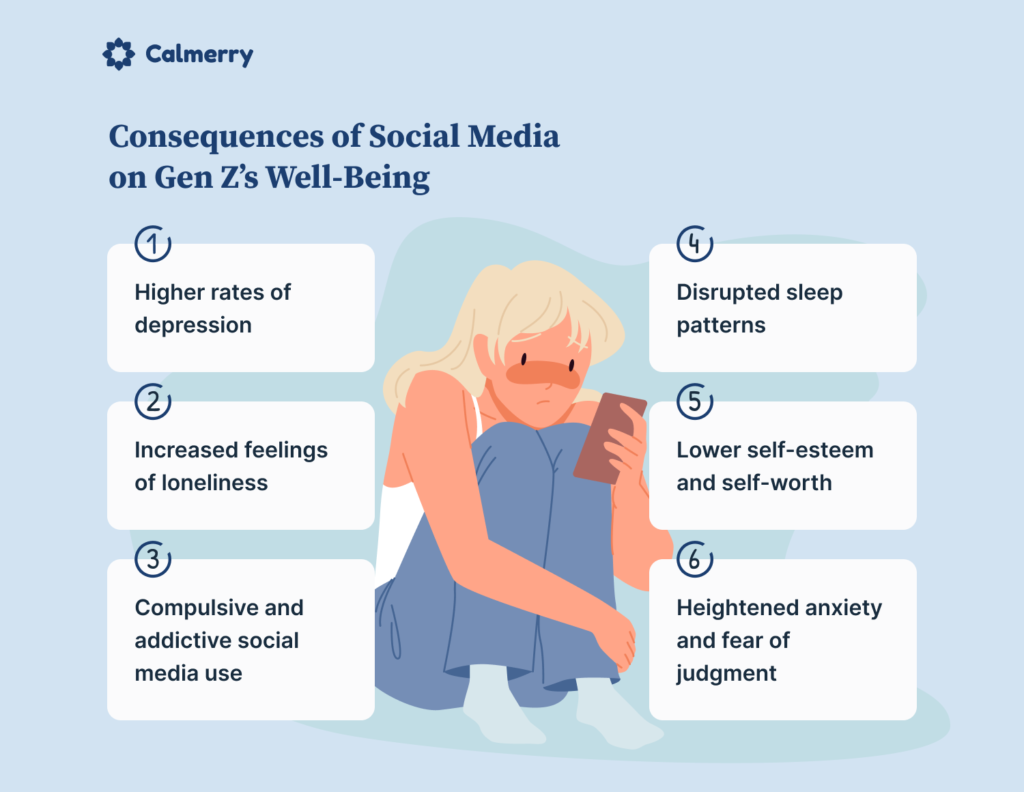
The impact of excessive use of social media on the mental health of Gen Z is large. This has been shown to go beyond temporary stress, as emotional and behavioral issues can be witnessed by Gen Z, as they increasingly use digital platforms.
Gen Z depression social media
Many people in the Gen Z generation have mental health issues as a result of their online behaviors. It is common for people to develop negative moods as a result of comparison, negativity, and overstimulation. Digital networks may contribute to people suffering from mental health issues such as anxiety and depression as a result of exposure to stressful online content.
Gen Z loneliness social media
Life online presents a paradox: the internet does not always ensure that relationships are meaningful. Generation Z feels lonely even when they are connected to the internet. Comparison, Judgment, and fear of rejection have implications in the real world because Generation Z avoids social events.
Social Media Addiction in Gen Z
Gen Z finds it difficult to control their usage of social networking sites. Many Gen Z individuals feel that their friends spend too much time online, yet they still feel compelled to check these sites frequently.
Disruption of sleep patterns and daily living
This means that the more time spent using online platforms, the worse the sleep quality. Poor sleep can increase the risk of anxiety and depression and can have a negative impact on school, work, and other daily activities. [5] Marciano, L., Jindal, S., & Viswanath, K. (2024). Digital Detox and Well-Being. PEDIATRICS, 154(4). https://doi.org/10.1542/peds.2024-066142
Low self-esteem and self-image
Exposure to influencers and idealized posts can lead to reduced confidence and heightened negative self-perceptions. Generation Z users experience poor mental health related to social media use, especially when comparing themselves becomes the norm.
Solutions to Mitigate Social Media Anxiety for Gen Z
It is not about cutting off from the internet to alleviate Gen Z anxiety and social media pressure. This concerns the proper use of digital platforms. A good first step would be a digital detox for Gen Z, which means taking a break from the internet and cutting down the number of hours spent online. Even small changes can help.
Another helpful tip is to “curate your feeds.” This means you should unfollow people and accounts who cause you stress and choose accounts that send positive messages. This might help boost your mood and reduce anxiety.
Mindfulness practices, such as writing and breathing, can also help. Digital platforms breaks can help this generation realize the effects of online platforms on their emotional state.
If you are experiencing any problems with anxiety or depression, seek professional advice. There are online therapy platforms for anxiety, such as Calmerry, that can deliver Gen Z mental health support that aligns with the digital lifestyle of youths. While social media can create problems, it can also create solutions.
The Bigger Picture and Moving Forward
It is crucial to comprehend Gen Z anxiety and social media pressure to address the mental health of young individuals. Digital networks influence the way that Gen Z interacts, compares, and presents itself, which is directly related to their emotional health. This could result in good mental health. As digital networks are increasingly being integrated into everyday life, it is significant to comprehend the social media impact on Gen Z.
The anxiety in Gen Z is caused by comparison, FOMO, cyberbullying, and digital platform influence. It results in depression, isolation, addiction, and irregular routines. Many Gen Z people are aware of how social media impacts their perception and relationships with others. The key is balance and not avoiding online networks.
This can be achieved by creating digital borders, having open communication, and receiving support from parents, teachers, and friends. For those who need extra assistance, experts and Calmerry are valuable Gen Z mental health resources. They help Gen Z maintain proper relationships with technology and social media.
Building Healthier Digital Habits for Gen Z
Mental health in Gen Z is heavily influenced by social media. Anxiety and pressure from digital networks are major concerns for Gen Z. Gen Z tends to compare themselves to others, experience FOMO, cyberbullying, and experience pressure to perform. These factors contribute to their anxiety and depression.
Learning about the effects of social media on Gen Z can help bring about a positive impact. Simple steps can lead to positive results. Reducing screen time, decluttering online platforms’ profiles, spending time offline, and reaching out to trusted sources of mental health information are important. Reaching out to a mental health expert is also important.
If this generation remains mindful and maintains healthy online behaviors, digital media can be a useful outlet. This could result in improved mental health.
Howarth, J. (2025, July 31). 25+ New Generation Z Statistics (2025). Exploding Topics. https://explodingtopics.com/blog/gen-z-stats
A-Cbt, J. S. P. (2024, August 19). SOCIAL ANXIETY IN GENERATION Z. National Social Anxiety Center. https://nationalsocialanxietycenter.com/2024/08/19/social-anxiety-in-generation-z/
Swns. (2024, August 16). Why 3 in 4 Gen Zers blame social media for their mental health decline. New York Post. https://nypost.com/2024/08/16/lifestyle/why-3-in-4-gen-z-blame-social-media-for-their-mental-health-decline/
Admin, & Admin. (2025, June 27). The social dilemma – Social media and your mental health. Lakes Counseling, Coaching and Consulting. https://lakesc3.com/the-social-dilemma-social-media-and-your-mental-health/
Marciano, L., Jindal, S., & Viswanath, K. (2024). Digital Detox and Well-Being. PEDIATRICS, 154(4). https://doi.org/10.1542/peds.2024-066142

online therapy
live video session