Strategies for Financial Stress and Anxiety Management


In this article
If you ask a stranger about how to fix money problems, they will likely give you a math answer: spend less, earn more, and keep a ledger of every cent. It sounds right. It is the calculator’s logic. But if the solution were really that simple, if it were just addition and subtraction, we wouldn’t be facing a global epidemic of financial stress.
We treat money like a logic puzzle. We are told that decent financial planning is the solution. Yet for many people, looking at a spreadsheet doesn’t reduce anxiety. It triggers it.
Maybe it is time to stop looking at financial difficulties as a failure of accounting. We should view them for what they usually are. A messy collision between our environment, our psychology, and our mental health. When we experience financial turbulence, we are not just losing money. We are losing our sense of safety.
The Biological Tax: How Financial Worries Impact Physical Health
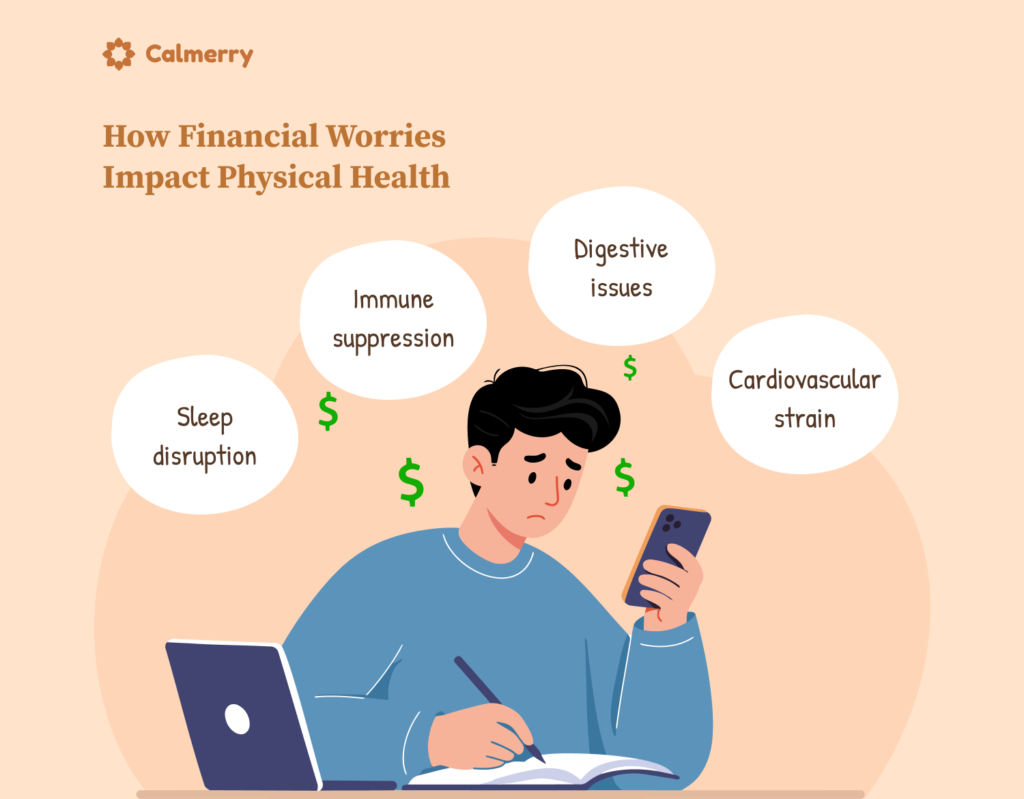
We talk about interest rates and inflation, but we rarely discuss the biological tax that financial worries levy on the body.
It is normal to stress out about money from time to time. A bill comes due. You focus, then pay it. The cortisol spikes and then drops. But chronic financial uncertainty keeps the body in a state of high alert. It is a “fight or flight” mode that never switches off. The tiger is always in the room.
Let’s take a look at the data on stress in the USA. The American Psychological Association notes that money is consistently a top stressor. [1] Stress in AmericaTM. (n.d.). https://www.apa.org. https://www.apa.org/news/press/releases/stress The stress levels associated with economic instability are not just a matter of mindset. They are a public health crisis.
The link between mental and financial well-being is physiological. Financial strain affects the body’s chemistry. Over time, this chronic psychological stress eats away at your physical health. We must understand that health and financial stability are tied together. You cannot drain one without damaging the other.
Here is what that stress looks like physically:
- Sleep disruption: Insomnia due to financial worries is a common sign that stress can take control of your rest.
- Cardiovascular strain: Continuous worry raises blood pressure and heart rate. Symptoms related to stress often manifest here first.
- Immune suppression: The body diverts energy to “survival,” leaving you open to illness.
- Digestive issues: The gut and brain are connected. Money anxiety often manifests as stomach pain or nausea.
The cycle is vicious; poor mental health makes it hard to manage financial obligations. You might spend impulsively to feel better. You might ignore the mail to feel safer. Then the stress takes a massive toll on your mind. It potentially triggers depression and anxiety.
The relationship between financial stability and health runs both ways. You cannot fix one while ignoring the other.
Why Traditional Financial Planning Often Fails to Reduce Stress
Conventional wisdom says if you are anxious, you should stare the numbers in the face: make a budget and track every latte.
But have you noticed something? For people with high anxiety, rigid tracking often increases stress.
For someone in the grip of financial anxiety, a budget doesn’t feel like a tool for freedom. It feels like a daily record of failure. If coping with financial pressure is your goal, hyper-fixating on scarcity might backfire.
This doesn’t mean planning is useless. But we need to question the spirit of the plan. Is your financial plan a punishment? Or is it self-care? If opening your banking app makes you panic, forcing yourself to look at it more often isn’t the answer.
Anxiety related to financial tasks must be addressed first. You have to regulate the anxiety. Only then does looking at the screen feel safe.
The Brain on Scarcity: Money, Stress, and Cognitive Function
Research into experiences of financial scarcity shows something fascinating. [2] Hilbert, L. P., Noordewier, M. K., & Van Dijk, W. W. (2021). The prospective associations between financial scarcity and financial avoidance. Journal of Economic Psychology, 88, 102459. https://doi.org/10.1016/j.joep.2021.102459 It actually lowers IQ temporarily. When your brain is full of money worries, you have less bandwidth for making decisions.
Researchers call this “tunneling.” You can only focus on the immediate threat. The unpaid bill. The empty fridge. You become blind to the long-term financial picture.
This creates specific cognitive blind spots:
- Impulsivity: You grab the quick fix because the brain wants immediate relief from the pain of scarcity.
- Avoidance: You leave envelopes unopened because the threat feels too big to handle.
- Memory gaps: You forget due dates because your working memory is overloaded with worry.
This is why telling someone in financial hardship to simply “make better choices” is ineffective. It lacks empathy. The stress itself depletes the mental resources needed to make those choices.
If money worries are paralyzing your ability to think, you might need support. Anxiety therapy can help restore the cognitive space you need to strategize.
The Heavy Weight of Debt and Mental Health
There is no greater source of stress in the modern wallet than debt.
But the stress rarely comes from the math. It comes from the moral weight we attach to it. We treat debt as a character flaw. This creates a toxic association between financial liability and self-worth.
In fact, credit card debt carries a heavier psychological burden than a mortgage. The debt and mental health connection is fueled by shame.
When we view debt as a moral failure, we hide. Debt stress paralyzes us. It stops us from calling creditors. It stops us from seeking financial counseling.
To overcome this, you must separate your net worth from your self-worth. You are not your loan balance. Understanding that debt is often a product of a broken system helps. It can relieve stress enough to let you tackle the numbers.
If the burden leads to hopelessness, recognize these as symptoms. They require care. Depression therapy acts as a lifeline when financial hardship and mental health struggles feel insurmountable.
Using Emotion as a Strategy for Coping with Financial Pressure
The spreadsheet is not the only answer. It is just a grid. We need to insert mental health care into our financial management. We must treat emotional regulation as a core financial skill.
Most of us carry “money trauma.” Maybe you grew up in poverty. Maybe your family fought constantly about finances. These ghosts shape how we handle money today. Understanding financial stress requires looking backward.
Are you overspending to fill an emotional hole? Are you hoarding cash because you felt unsafe as a child? Mental health professionals can help unpack this. They turn subconscious habits into conscious choices.
Then there is the trap of perfectionism. A complex strategy you abandon in a week is worse than a mediocre one you stick to. Coping mechanisms must be sustainable. Maybe you don’t budget everything. Maybe you just track groceries. Small wins help reduce financial stress by building confidence. When you manage stress effectively, you become a better money manager.
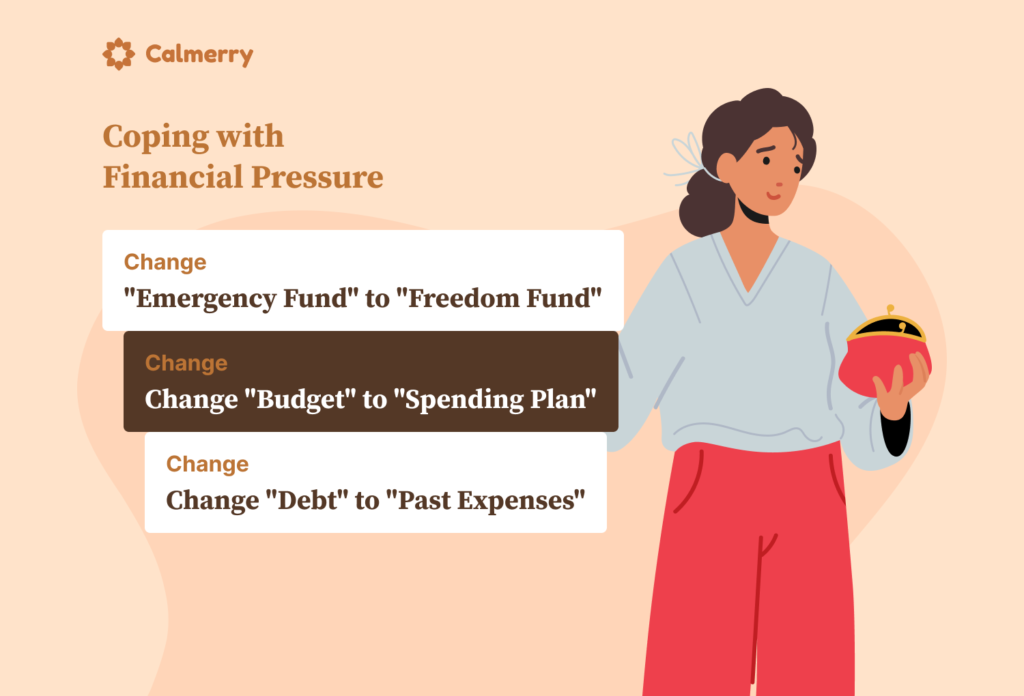
Here is a practical tip to lower the pressure. Try reframing the names of your accounts:
- Change “emergency fund” to “freedom fund”: The word “emergency” implies doom. It signals the brain that something terrible is coming. “Freedom” signals power.
- Change “budget” to “spending plan”: A budget feels like a diet. A plan feels like a map.
- Change “debt” to “past expenses”: Neutralize the shame. It is just money you already spent. Now you are paying for it.
This changes the perceived financial purpose from fear to power. This shift can lower levels of financial panic.
You Don’t Have to Manage Financial Burdens Alone
We hire mechanics for cars. We hire doctors for bodies. Yet we try to manage stress and money alone.
There is a growing recognition of the financial and mental health intersection. [hightlight]Sometimes, the best financial advisor to start with is a therapist.[/highlight] They help break the cycle of avoidance.
Navigating stress and mental health challenges simultaneously is hard work. If financial struggles cause symptoms of mental health problems, therapy is a smart financial decision. It restores the energy you need to earn and save. For those with tight schedules, online therapy is accessible. It helps reduce the psychological stress of daily life without the commute.
Some advisors now operate as “financial therapists.” They help manage their financial roadmap while respecting the emotional toll.
Connection: A Tool to Help Reduce Financial Stress
Isolation feeds financial worries and mental health decline. We don’t talk about money. It’s “impolite.” This silence amplifies the shame.
Facing financial challenges is easier when we realize we aren’t the only ones.
Talk about money-related stress with trusted friends. It helps reduce the burden. It breaks the stigma. It turns a secret shame into a shared problem. When we share our experiences of financial difficulty, we often find our peers are navigating the same financial issues. This validation lowers stress levels.
Defining Financial Health Beyond the Bank Balance
True financial health isn’t just a number. It is your relationship with the number.
If you have a million dollars but live in fear of losing it, you have financial stress. If you have very little but feel capable and supported, you are in a state of wellness.
If you feel overwhelmed, try these adjustments to help manage finance-related stress:
- Automate decisions: Every time you decide to pay a bill or save, it costs mental energy. Automation removes the daily decision-making that leads to worry.
- Limit the check-ins: Obsessively checking your balance is a safety-seeking behavior. It fuels anxiety. Schedule a specific time once a week to review finances and reduce financial noise the rest of the time.
- Focus on flow: Financial uncertainty often comes from not knowing timing. Visualizing cash flow can be less stressful than staring at a static debt number.
- The “time to time” rule: Remind yourself that it is okay to worry about money from time to time. It shows you care. But set a timer. Worry for 15 minutes. Then stop.
The Long Game: Prioritizing Mental and Physical Health
We have to acknowledge something. Long-term financial stability depends on our ability to function.
If we run ourselves into the ground working to pay off debt, we incur a “health debt.” That is far more expensive to repay. The effects of financial pressure can lead to poor mental health. This impacts our earning potential. Protecting your mind is a wealth preservation strategy.
The National Institutes of Health aggregates studies showing the association between financial hardship and depression and anxiety. [3] National Center for Biotechnology Information. (n.d.). https://www.ncbi.nlm.nih.gov/ Financial strain and mental health deterioration often come before physical health crises.
Taking a walk is not a distraction from your financial goals. Going to therapy is not a waste of money. Getting sleep is not lazy. These are essential infrastructure.
Compassion Over Calculation when Financial Situation Changes
Financial situation changes happen. Stress has increased for everyone since the recent economic shifts. By understanding the relationship between financial strain and our minds, we can navigate these waters.
To reduce financial stress, put down the calculator. Look at the human in the mirror. Forgive yourself for past mistakes. Recognize that debt and financial stress are often symptoms of an expensive, hard-to-navigate world.
Address the mental health issues underlying your money habits. Treat your anxiety with the same seriousness as your bank balance. You can start overcoming financial panic. Not by being harder on yourself. By being smarter about your stress.
The most valuable asset you own is not your house. It isn’t your portfolio. It is your mental and physical health. Protect that first. The implications for financial stability will follow.
Whether you are dealing with debt and mental and physical fatigue or simply trying to optimize your future, remember this. Finance is a tool for living. It is not the measure of your life.
The Language of Tension and Measures of Financial Success
We must look at the specific language of our stress. When we say we have financial worries, do we mean we’re worried about survival? Or are we worried about status?
The status and mental health link is potent. Much of our spending is driven by a desire to belong. Recognizing this can help reduce financial stress. It allows us to opt out of expensive social competitions.
We must look at measures of financial success differently. Is success a credit score? Or is it the ability to sleep? By redefining financial health, we create a financial plan that supports our mental and physical health.
If you are facing financial headwinds, know that debt and mental strain do not define your future. You have the capacity to reduce stress. Change your relationship with money. Seek community. Use mental health care resources.
The path to overcoming financial anxiety starts with a single breath.
Understanding the Nuance in Financial Struggles
We often categorize pain. We put physical pain in one box. Emotional pain in another. Money pain in a third. But the brain doesn’t have boxes. It has a single alarm system.
When you receive a collection notice, the brain reacts the same way it reacts to physical danger. The heartbeat quickens. The palms sweat. This is why coping with financial demands is so exhausting. You are fighting a tiger every time you open the mailbox.
We need to stop pretending that money is sterile. It is messy. It is emotional.
In fact, the link between financial stability and mental wellness is the single strongest predictor of overall happiness. Yet we leave financial management out of our wellness conversations. We talk about yoga. We talk about diet. We rarely talk about the debt stress that undoes all that good work.
It is time to integrate.
If you are dealing with personal unsecured debt and mental load, you are carrying a heavy pack. You don’t have to carry it perfectly. You just have to keep moving.
Financial worries and mental health are tangled together. You pull one string, the other tightens. But the reverse is true. You loosen one string, the other relaxes.
Start with the mind. The money will follow.
The Myth of the Rational Spender and Financial Counseling
Economists love to talk about the “rational actor.” The person who makes every financial decision based on logic. This person does not exist.
We are emotional creatures. We spend when we are sad. We save when we are scared. We avoid bills when we are overwhelmed.
Acknowledging this irrationality is key to understanding financial stress. You are not broken because you bought something you couldn’t afford. You are human. You were meeting a need. Maybe it was a need for comfort. Maybe a need for control.
Once you identify the need, you can find cheaper ways to meet it. That is financial counseling in a nutshell. It isn’t just about the math. It’s about the “why.”
Final Thoughts on Overcoming Financial Anxiety
What does freedom look like?
Maybe it isn’t being rich. Maybe it is being unbothered.
If we can reduce financial stress to a hum instead of a roar, we win. We regain our lives.
We worry about money from time to time. That is part of the deal. But it shouldn’t be the whole deal.
Your financial situation is a chapter. It is not the book.
Take care of your physical and mental health. The rest is just numbers. And numbers can always be changed.
If the stress can take away your joy, then the financial plan is wrong. Change the plan. Keep the joy.
This is the work. It is hard. It is worth it.
Stress in AmericaTM. (n.d.). https://www.apa.org. https://www.apa.org/news/press/releases/stress
Hilbert, L. P., Noordewier, M. K., & Van Dijk, W. W. (2021). The prospective associations between financial scarcity and financial avoidance. Journal of Economic Psychology, 88, 102459. https://doi.org/10.1016/j.joep.2021.102459
National Center for Biotechnology Information. (n.d.). https://www.ncbi.nlm.nih.gov/

online therapy
live video session